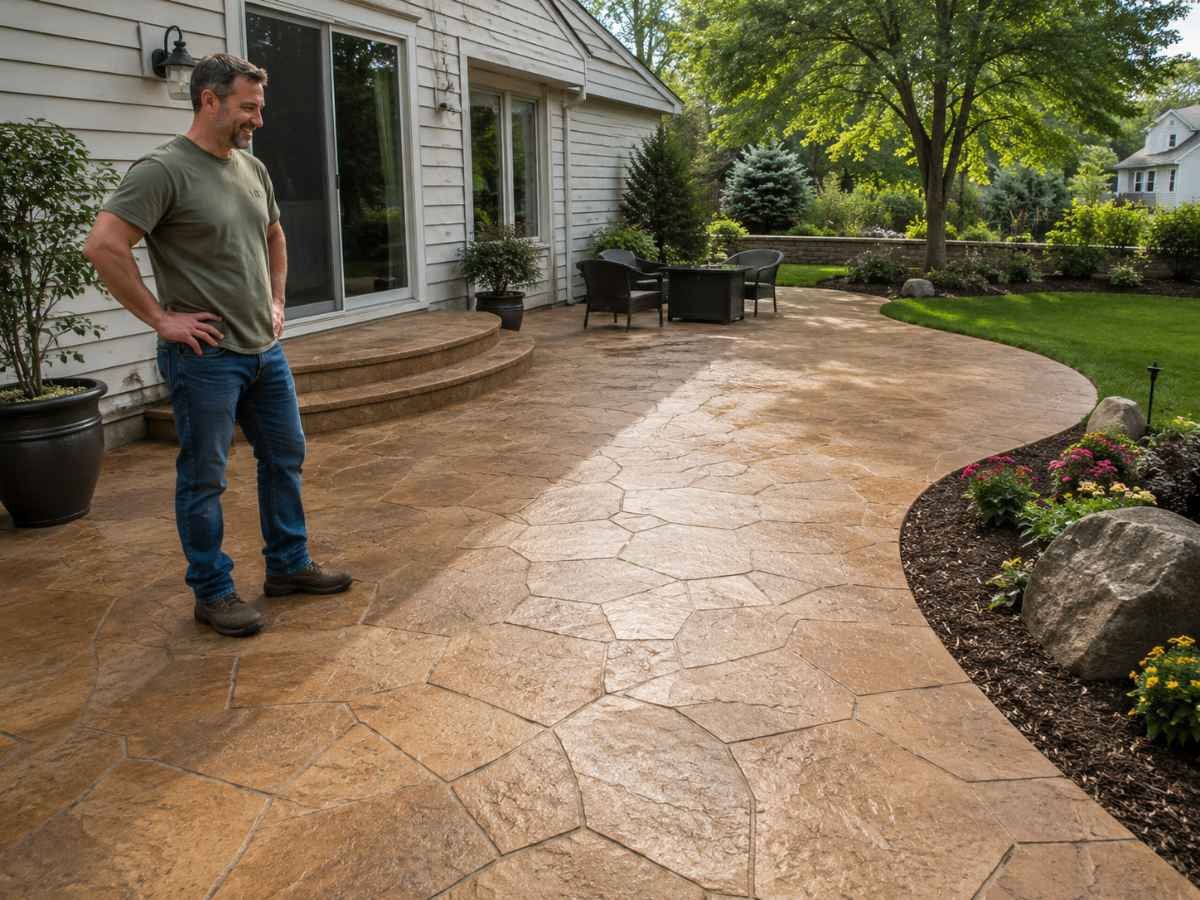
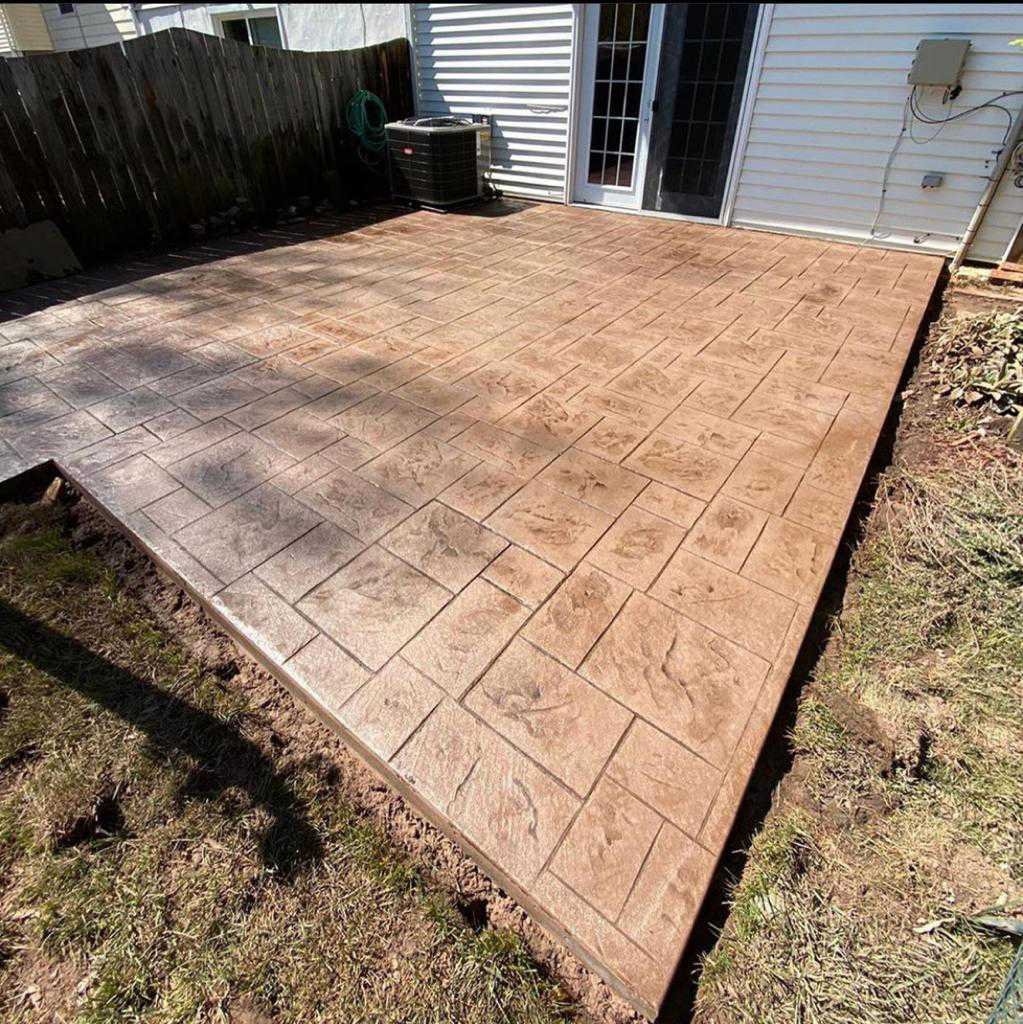
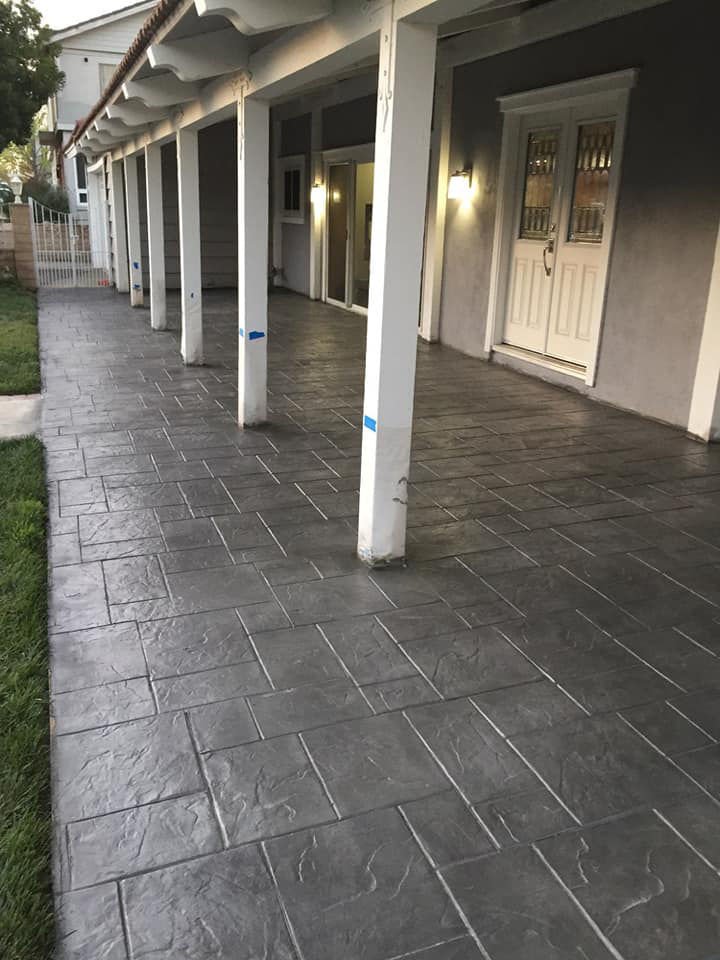
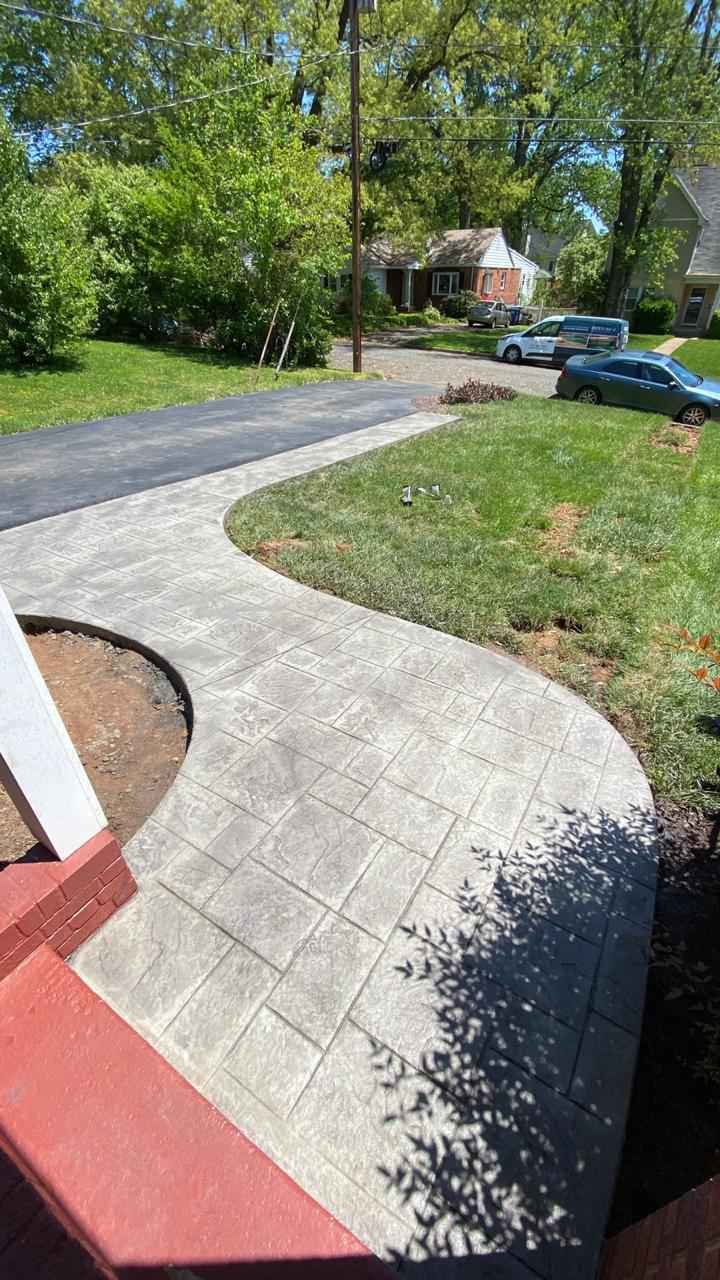
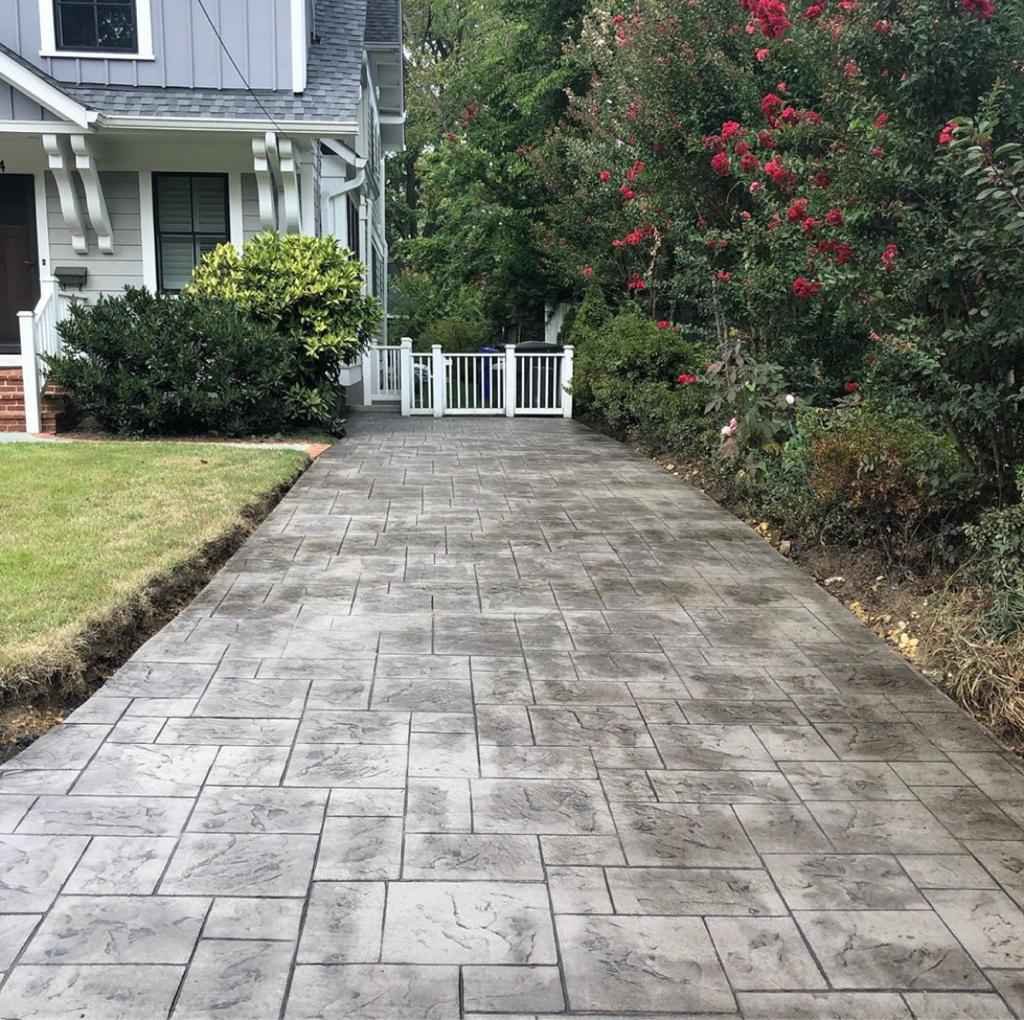
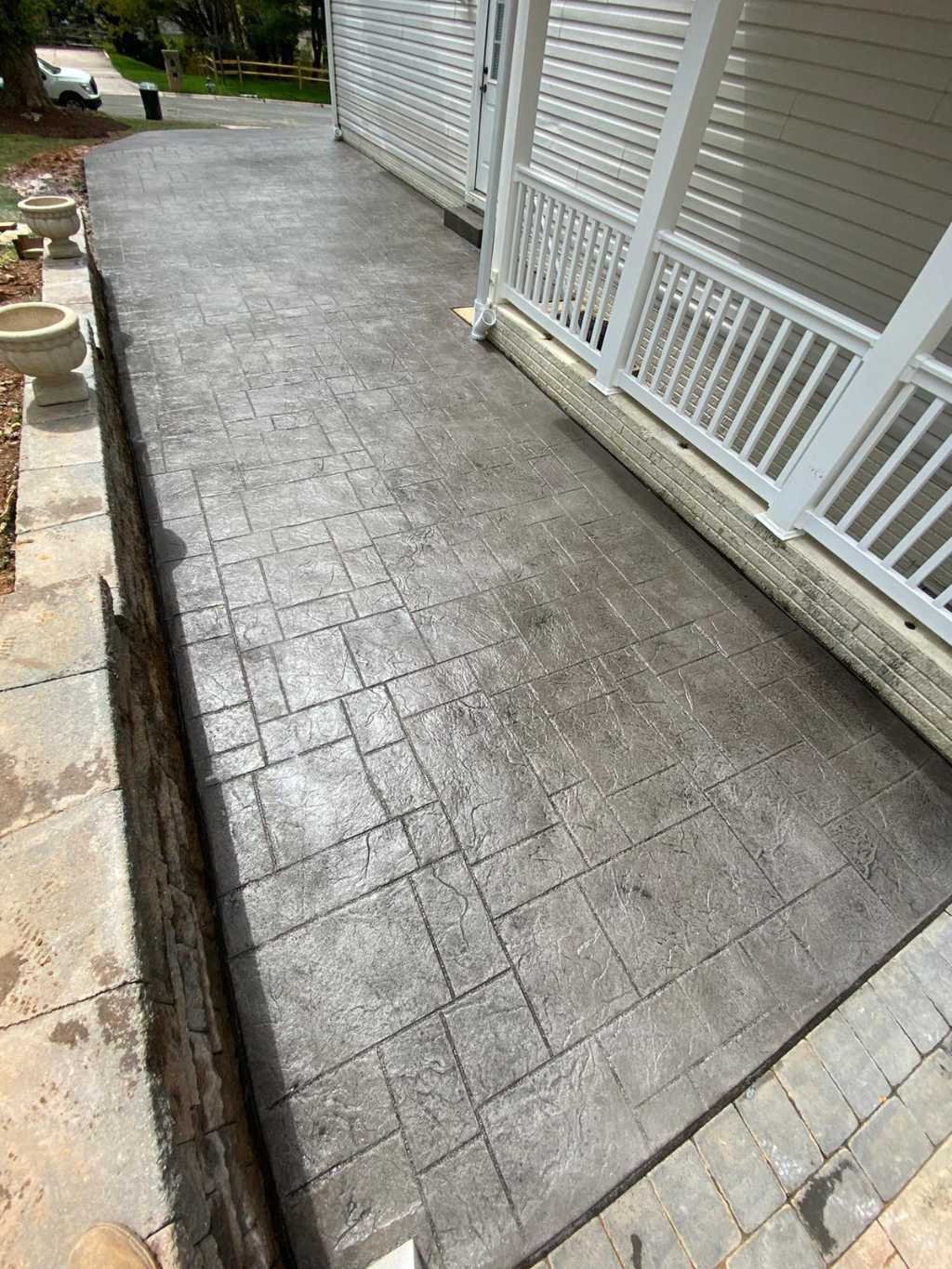
So what does stamped concrete look like when it is finished? It can look a lot like stone, brick, slate, tile, or even wood, and at first glance it often reads like a high-end hardscape rather than plain concrete. The trick is in the texture and color that get pressed and blended into the surface while it is still fresh. If you are trying to picture it for your own yard, the style can be subtle, bold, or somewhere in between.
Real Stamped Concrete Projects
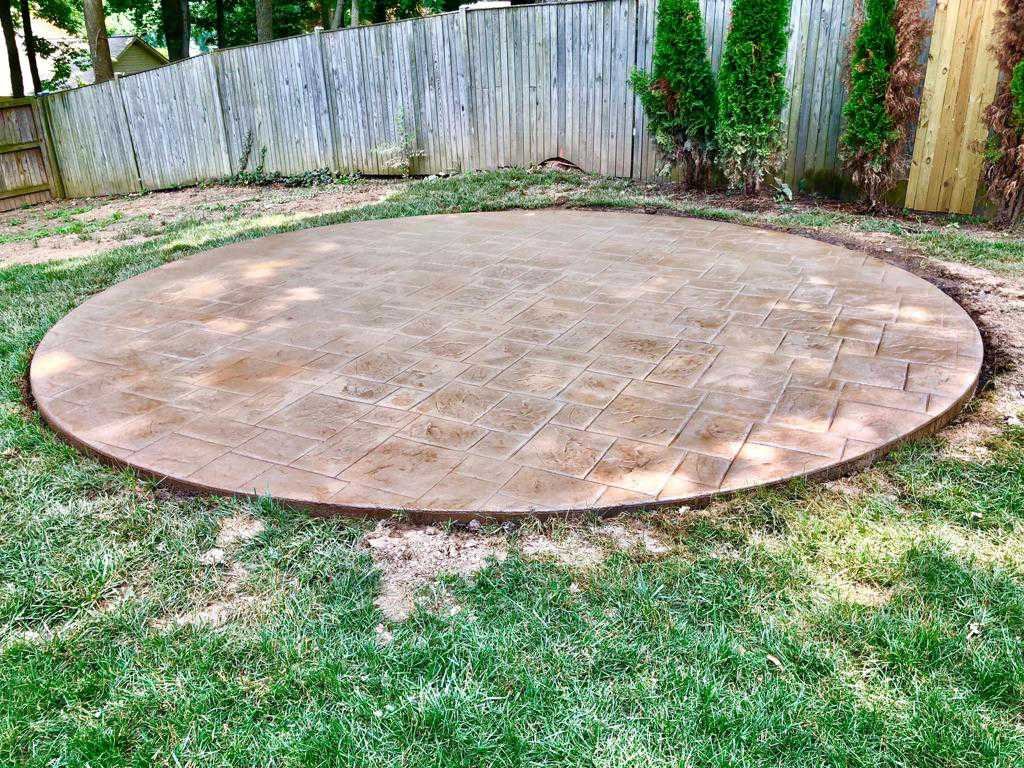
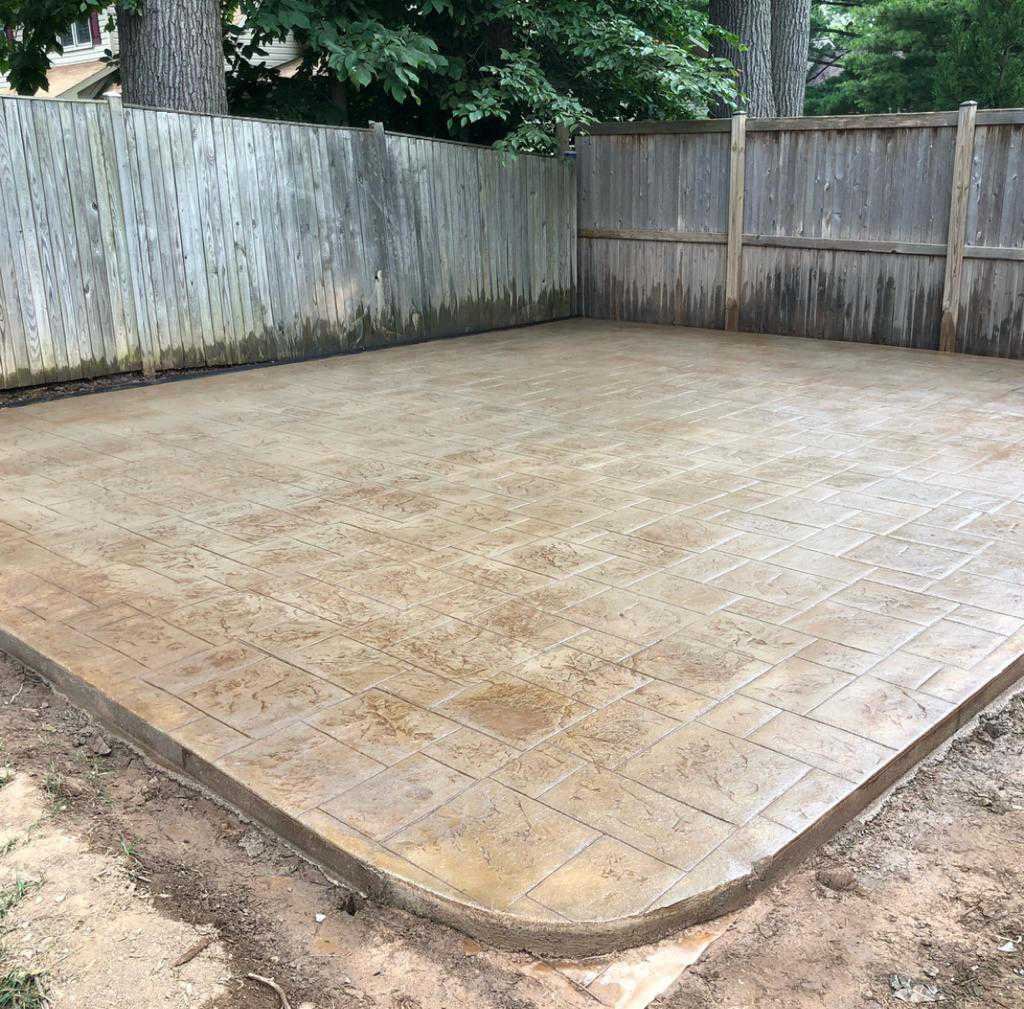
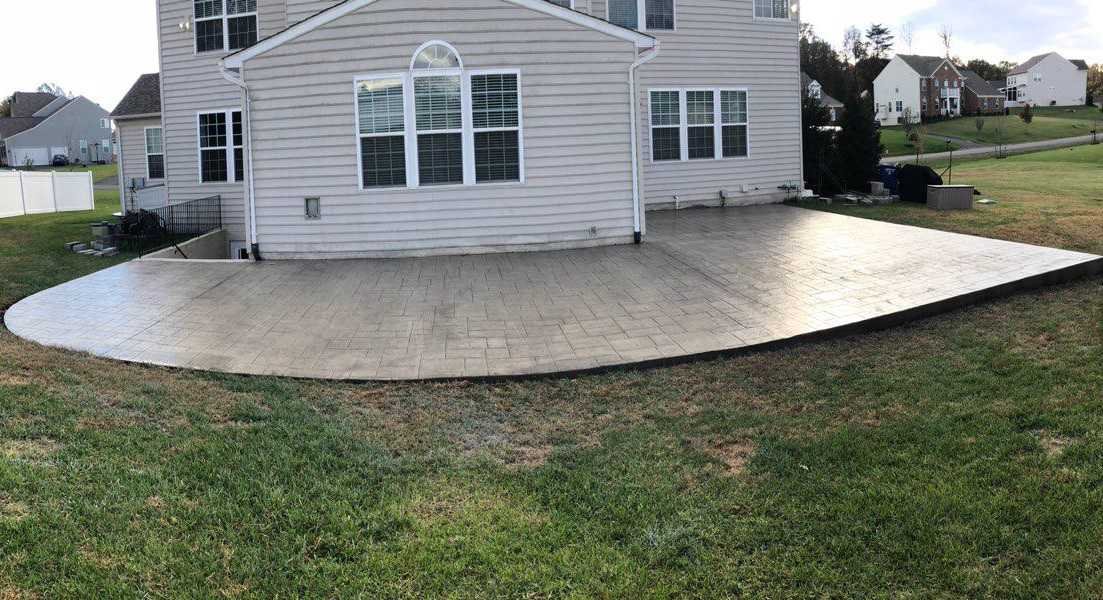
Key Takeaways
- Stamped concrete is concrete made to mimic materials like stone, brick, slate, or wood.
- The most natural look usually comes from using layered stamped concrete colors and a realistic pattern.
- Popular stamped concrete patterns include ashlar slate, flagstone, brick, cobblestone, and wood plank.
- Stamped concrete works well on patios, driveways, walkways, pool decks, and courtyards.
- It needs cleaning and resealing over time to keep the color and finish looking good.
What stamped concrete looks like up close and from a distance
From a distance, stamped concrete can look very convincing. A well-done patio or driveway may resemble natural flagstone or a brick paver surface. The color changes and textured surface help break up the flat look that plain concrete usually has.
Up close, you can still tell it is concrete. Some repeating pattern lines may show, and the surface will not have the exact randomness of real stone. That is not a bad thing. It just means the final look depends a lot on the installer’s skill and the pattern chosen.
Which stamped concrete patterns look most realistic?
The most common stamped concrete patterns are chosen to copy real building materials. Ashlar slate is a favorite for patios because it gives a clean, upscale stone look. Random flagstone works well when homeowners want a more natural and relaxed feel.
Brick patterns are a strong choice for walkways and driveways, especially if you want a classic look. Cobblestone adds old-world charm, while wood plank patterns can mimic a deck without the upkeep of real wood. The pattern you pick has a big effect on whether the surface feels modern, rustic, or traditional.
Popular stamped concrete patterns
Some of the most used stamped concrete patterns include:
- Ashlar slate
- Random flagstone
- Brick
- Cobblestone
- Wood plank
- Tile-like patterns
- Seamless textures
What stamped concrete designs work best for different spaces?
Stamped concrete designs should match how the space is used. A patio often looks best with a stone or slate design that feels calm and natural. Pool decks usually benefit from lighter colors and a texture that adds grip underfoot.
Driveways often need a stronger, more durable look, so brick or cobblestone styles are popular. Walkways can use smaller patterns that guide the eye and make the space feel polished. If you want a more custom look, borders, medallions, and inset patterns can add detail without making the surface feel crowded.
What colors are used in stamped concrete?
Stamped concrete colors play a huge role in the final look. A single flat color can look plain, while layered tones make the surface feel more natural. Many contractors use a base color, then add a release color or stain to create depth.
Earth tones are the most common choice because they look close to natural stone. Grays, tans, browns, reds, and warm terracotta shades are all popular. Two-tone and antiqued finishes can also make the surface look more realistic by adding contrast in the low spots.
How do contractors make stamped concrete look natural?
The best results usually come from mixing pattern, color, and texture the right way. Integral color can give the slab a solid base tone. Color hardener can boost surface color and make the finish richer. Release agents and stains are often added to bring out shadows and highlight texture.
That layered look is what helps stamped concrete avoid a flat, painted appearance. When the pattern and color work together, the surface can look like real stone at a glance. When they do not, the repetition becomes easier to spot.
Does stamped concrete look fake?
It can, but it does not have to. The finish looks more believable when the pattern fits the material being copied and the color has some natural variation. A good installer also pays attention to joint placement, edge details, and how the stamps repeat across the slab.
Stamped concrete may look less realistic if the color is too even or the pattern repeats too often. It can also look off if the design does not match the home or landscape. For example, a heavy brick pattern may feel out of place on a soft, modern patio.
Where does stamped concrete work best?
Stamped concrete is common on patios, driveways, walkways, pool decks, and courtyards. It gives homeowners a way to get a decorative finish without using separate pavers or natural stone. That makes it a practical choice for larger spaces.
It is especially useful when you want a finished look that still feels durable and easy to care for. For many homes, it adds curb appeal without changing the whole layout of the yard. It can also help tie together the home, driveway, and outdoor living space.
What should homeowners know about cost and maintenance?
Stamped concrete usually costs more than plain concrete because of the extra labor, pattern work, and color steps. More detailed stamped concrete designs, borders, and custom accents usually push the cost higher. Simple patterns with fewer color effects are usually the more affordable option.
Maintenance matters too. Stamped concrete often needs cleaning and resealing about every 2 to 3 years, depending on weather and wear. That helps protect the color and keep the surface looking fresh. If you skip upkeep, the finish can fade or lose some of its depth.
How do you choose the right stamped concrete finish?
Start with the look you want to match. If you like a natural style, go with stone or flagstone patterns in tans, browns, or soft grays. If you want something more formal, brick or slate may be a better fit.
It also helps to think about the space itself. A pool deck needs good texture and lighter color, while a driveway needs a finish that can stand up to use. A good contractor can show samples and help you compare stamped concrete patterns, colors, and designs before work starts.
What should you ask before hiring a contractor?
Ask to see real project photos, not just sample boards. You want to know how the finish looks on a full patio or driveway, in real light, after it has cured. It is also smart to ask how they handle color layering, control joints, and resealing.
You should ask what pattern they plan to use and how they will keep it from looking too repetitive. Good timing matters a lot with stamped concrete, so experience counts. A contractor who knows how to place and stamp the slab cleanly is much more likely to deliver a natural-looking result.
Is stamped concrete a good choice for your home?
For many homeowners, yes. It gives you the look of more expensive materials with less hassle than separate stone or pavers. It is also flexible enough to fit classic, rustic, or modern homes.
The final result depends on the pattern, the colors, and the installer. If those pieces come together well, stamped concrete can look polished and high-end without feeling overdone. If you are comparing options, it is a smart idea to look at both the style and the long-term care before you decide.