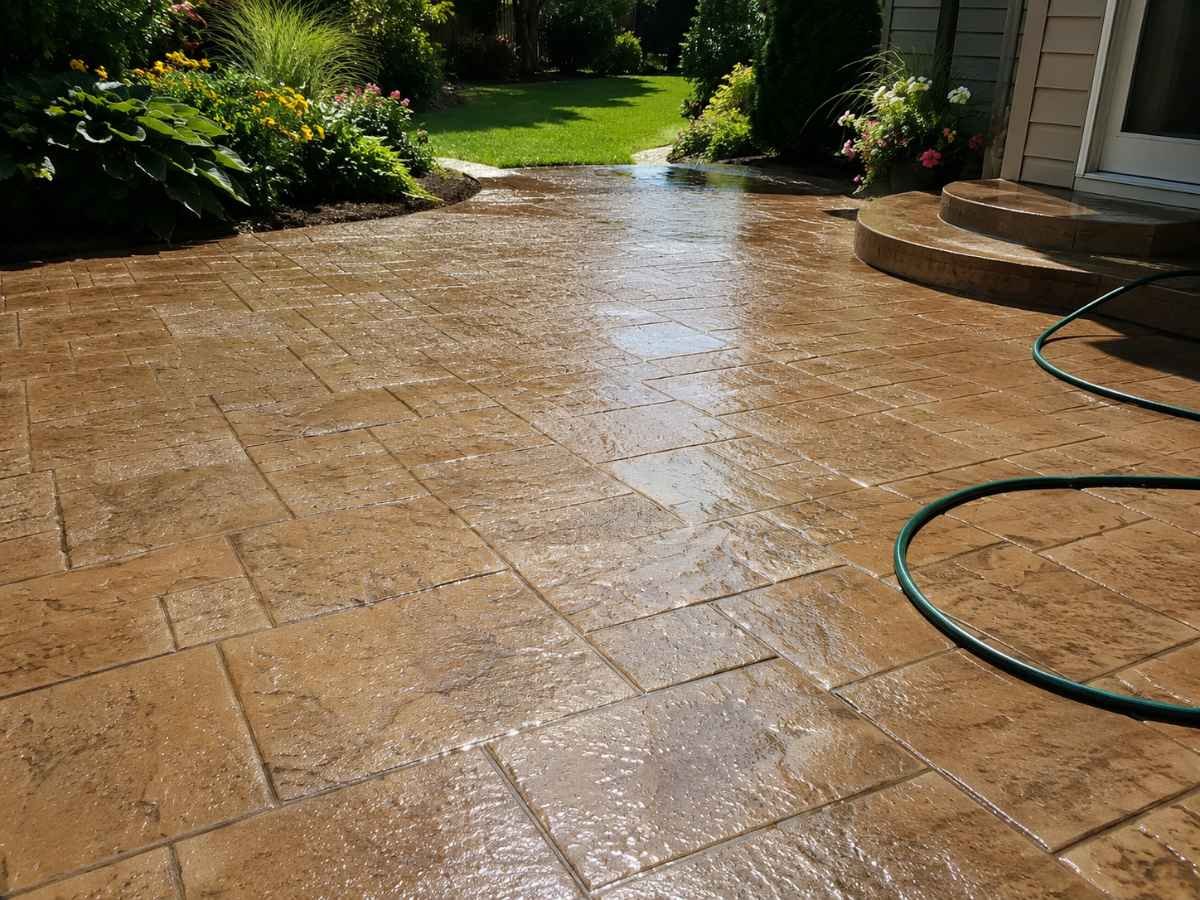
Stamped concrete makes patios and driveways look great for years. Dirt and grime build up in the textures over time.
You can keep it looking sharp with simple cleaning steps. I’ll walk you through easy ways to do it right, so it stays protected and beautiful.
Key Takeaways
- Sweep and hose off debris often to prevent buildup.
- Use mild dish soap for routine cleaning, never acids or harsh chemicals.
- Pressure wash carefully on low settings if needed for deep cleans.
- Reseal every 2-3 years to protect from stains and fading.
Gather Your Cleaning Supplies First
Start with basics you likely have at home. Grab a stiff push broom, garden hose, bucket, and mild dish soap. A soft-bristled brush works for scrubbing textures. Skip metal brushes, they scratch the surface.
For tougher jobs, pick up pH-neutral concrete cleaner from a store. Avoid vinegar or bleach unless diluted for specific stains. Test any new product in a hidden spot first. This keeps your stamped concrete safe.
Clear Loose Debris Every Week
Regular sweeping stops dirt from grinding into the stamp patterns. Use a push broom to whisk away leaves, twigs, and sand. Do this weekly, especially in fall or after storms.
Follow with a garden hose rinse on medium pressure. This flushes out loose grit without harm. It takes just minutes but makes deeper cleans easier later. Your surface stays fresh with this habit.
Routine Cleaning with Soap and Water
Mix warm water with a teaspoon of dish soap per gallon. Wet the stamped concrete first to loosen dirt. Mop or scrub with a push broom in sections.
Rinse well with the hose to remove all soap. Soap residue dulls the finish if left behind. Do this every one to two months. It keeps colors vibrant and sealers intact.
How to Powerwash Stamped Concrete Safely
Power washing stamped concrete works for stubborn grime, but go slow. Rent a washer with under 2,000 PSI. Use a 40-degree fan tip and hold it 9-12 inches away.
Start on the lowest setting. Move in steady sweeps to avoid lines or sealer damage. Test a small area first. Pros often charge $300 to $1,000 for this, depending on size.
Many experts debate pressure washing. Some say it strips sealer over time. Others use it often with care. If unsure, stick to hose rinsing or call stamped concrete experts.
Tackle Oil and Grease Stains
Oil spots from cars or grills soak into textures fast. Sprinkle cat litter or baking soda on fresh spills to absorb. Let it sit overnight, then sweep away.
For set-in stains, use an alkaline degreaser. Apply, scrub gently, and rinse. Commercial options cost $20 to $60 a bottle. Repeat if needed, but test first.
Avoid harsh solvents. They eat at the sealer. Quick action prevents deep damage.
Remove Rust and Mildew Spots
Rust from tools or planters needs a gentle paste. Mix lemon juice with cream of tartar. Apply, let sit 10 minutes, then rinse.
Mildew loves shady spots. Mix one part bleach to ten parts water. Spray on, wait five minutes, scrub, and rinse fully. Test in a corner, bleach can fade colors.
Efflorescence, that white powdery buildup, calls for a mild concrete cleaner. Brush it off after. These steps restore even tones.
What Not to Use on Stamped Concrete
Harsh chemicals ruin the protective sealer. Skip acids, vinegar, or strong alkalis. They cause etching or white haze.
No de-icing salts in winter either. Use sand or kitty litter instead. Metal tools scratch patterns. Stick to soft brushes and pH-neutral soaps.
How Often Should You Clean Stamped Concrete?
Sweep weekly to keep debris at bay. Wet clean monthly in high-traffic spots like driveways. Deep clean annually or after big messes.
Shaded areas need extra mildew checks. High-use patios fade faster. Adjust based on your yard’s traffic and weather.
Why Sealing Matters After Cleaning
Cleaning alone isn’t enough long-term. The sealer shields against stains and UV fading. It wears off in 2-3 years.
After cleaning, wait 24-48 hours for full drying. Apply fresh sealer with a roller or sprayer. DIY kits run $40 to $150 per gallon. Pros handle it for $200 to $800.
Faded or splotchy color means reseal time. It brings back shine and protection.
Costs of Cleaning Stamped Concrete
DIY stays cheap. Push brooms cost $15 to $40. Hose work is free. Pressure washer rentals hit $50 to $100 daily.
Pro services vary by size. Basic cleans run $150 to $500 yearly. Deep power washes reach $300 to $1,000. Factor in your local rates.
Resealing adds value. It cuts future stain fights. Weigh DIY vs. pro based on your time.
Winter Care for Stamped Concrete
Cold weather brings unique challenges. Shovel snow gently, no scraping. Use plastic shovels to avoid gouges.
Avoid salt melts. They pit the surface. Plastic shovels and sand keep it safe. Hose off winter grime in spring.
Tips for Long-Lasting Stamped Concrete
Park cars off textured areas if possible. Trim plants to cut shade and mildew. Rinse pollen or sap right away.
Annual pro checks catch issues early. Combine cleaning with sealing for best results. Your investment stays like new.
High-traffic spots like stamped concrete patios benefit most from routine care. Small efforts pay off big.
Common Mistakes Homeowners Make
Rushing with high pressure blasts the sealer. Going too close leaves marks. Always keep distance.
Forgetting to rinse soap fully clouds the finish. Double-check every time. Overlooking stains lets them set.
Ignoring resealing fades colors fast. Plan it after big cleans. Learn from these to save headaches.
Stamped concrete rewards steady care. Follow these steps, and it’ll look great for decades. Got tough spots? Local pros can help.